
President’s report
 With the rollup to Christmas your Committee has rolled down its sleeves almost to its wrists. At its December meeting the Committee will finalise its programme for 2022.
Earlier in the year we planned a meeting with our new Federation President Jan Pentecost, but the move to Level 4 lockdown stymied that. A joint meeting for both Wellington Central and Wellington South East Associations has been scheduled for 1.30pm, Thursday 24 March 2022 at the Tararua Tramping Club, Moncrief Street, Mt Victoria. Please invite your friends to join you at the meeting so you can introduce them to Grey Power.
President Jan spoke to the Zone 4 meeting on 7 October where she set out the work of the Federation Board. The Modernisation Plan from some years ago has been dusted off and the Board is now implementing it over time.
Our public meeting with Nicola Willis MP was very successful with interesting questions about her housing portfolio. A report on the meeting is included in this newsletter.
There comes a time each year when unfinancial members are removed from the Federation database and the Grey Power magazine is no longer sent to them. The Wellington Central Association also removes non-financial members. So, we welcome your annual membership payment in a timely manner.
Wishing you a joyful festive season and abundance in 2022.
Colleen Singleton
President, Wellington Central Grey Power Association
Nicola speaks
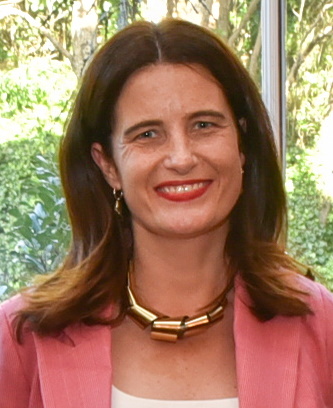 We organised a talk by Nicola Willis, National list MP and housing spokesperson. She entered Parliament in 2018 on the retirement of Bill English and Stephen Joyce, and rose quickly through the National ranks. She contested the Wellington Central seat, and lost to Grant Robertson, but remained in Parliament thanks to being 13th on the National list. She now has her eye on the Ohariu seat, and has recently become the deputy leader. So far, so Wikipedia.
She first touched on covid, endorsing vaccination, and suggesting the danger signal was unlinked cases (those that couldn’t be traced to an existing case). She said to persuade the hesitant rather than mandate them, then moved on to pasting Labour for taking too long to get moving, and not increasing the system capacity. So far, nothing new.
Then we moved on to housing. She claimed most of the people most concerned about the issue were older, and worried about their children getting on the housing ladder, with “unsustainable” house prices a symptom of a broken market, with excessive amounts of wealth tied up in housing rather than more productive uses.
Her solution? A 5 point plan. Land cost should be reduced by freeing up supply, there should be less restrictions on building, non-profits should be building social housing with public money. Tax laws that make build-to-rent too hard need to go, and kitset housing is the solution to building cost rises.
She then talked about her own bit of legislation, the Unit Titles bill that is currently wending its way through Parliament. It modernises and simplifies an overly complex piece of legislation dealing with apartment ownership, and she is confident it will be passed.
The questions covered the super age (she’s in favour of gradually increasing it) immigration (in favour) and encouraging people into trades rather than university.
She seemed to be well versed in the policy details, and spoke well.
A few criticisms. The kitset houses is a bit of a non-starter (they’ve been round for several centuries and they’re only a small proportion of new builds everywhere in the world). Densification is a vexed issue for her voters as they are the ones who may be living next to 5 story apartment blocks blocking their sun and view, and the house price rise problem is pretty much worldwide.
Your vaccine passport
Members have been asking how they can obtain their My Vaccine Passports. Although some businesses and organisations may choose to ask customers or visitors for their pass, you will not need it to enter supermarkets, pharmacies, health and disability services, petrol stations, public transport, schools and early learning service providers, housing and housing support services.
My Vaccine Pass is free and you can get it if you have had 2 doses of the Pfizer COVID-19 vaccine in New Zealand There are four ways to get your My Vaccine Pass:
Via internet / online If you have an email address and valid identification (passport, birth certificate, drivers’ licence) you can request your pass through the website: MyCovidRecord.health.nz
Via phone If you cannot access My Covid Record, or do not have a unique email address or valid ID, you can call the Ministry of Health on: 0800 222 478 to request a physical copy. It will help to have your NHI number ready — you can find this on a hospital letter, a prescription or prescription receipt or by phoning your doctor
In person Some pharmacies that are carrying out COVID-19 vaccinations, are also able to assist people with getting your My Vaccine Pass. Visit: www.healthpoint.co.nz to check if a pharmacy near you if offering that service.
Via text for disabled people Text service to support disabled people – 8898.
Growing old in an adopted land
Were you born overseas? You are not alone: about 28% of older people were born outside NZ. This group is being studied by Agnes Szabo from Victoria University, who is following groups of older people over time (longitudinal studies). Part of her interest in this field is an interest in her own future, and knowing what it means to age well. Universal wants are financial security, social participation, and health. Migrants are generally very healthy when they arrive, but this advantage disappears by their 60s. Those from more collectivist cultures judge their happiness more by how well their descendants are doing, and whether they are passing on their own traditions. One difficulty is that in some cultures looking after your parents is seen as a social obligation, but the younger generation is not so keen on this, and this (and other factors) may prompt retired migrants to return to their home countries.
Inner-City Wellington residents association
Inner-City Wellington (ICW) https://www.innercitywellington.nz/ is the residents association for inner-city Wellington (the Te Aro/Wellington Central area).
- There are over 120 apartment buildings, and around 15,000 people who have made their home in our area.
- We are keen to strengthen our communication with apartment owners and residents, and we think that Body Corporates in apartment buildings – many of which have newsletters and Facebook groups – could be an effective way through which to share information with residents about what’s happening in this part of the city, invite their thoughts or insights about what they would like to have in their communities, and to ask them about any ways in which ICW can reflect their interests or concerns when we are liaising with the Council and others.
- For example, one idea is exploring how individual apartment buildings may have resources or equipment that could be shared in an emergency (earthquakes, tsunamis etc), and another is considering that there are many apartment buildings now where families with children are living – so what green space and neighbourhood facilities might they like to see.
- From talking to organisations like the Wellington City Council, WREMO, LINZ, and even the Body Corporate Chairs Group, it seems there is no agency that has a central list of Body Corporate Chairpersons or Committee members. We have a project underway to build that list
- If you are in an apartment building in our area (postcode 6011) – or perhaps have friends or family in one – and can help by providing a contact for your building, we would be very grateful. Please drop an email to:
Jill Wilson icwproject21@gmail.com
Residential villages: a call for change
The Retirement Villages Residents Association of NZ (RVRANZ), who represent residents of residential villages, are calling for stronger action from the Government to remove some of the unfair practices in the industry. For example, when a unit is vacated (perhaps for the resident to move to another village) there is no pressure on the operators to pay out, and they can keep on charging their weekly fees. Check out their website for things to look out for if you are pondering a move: https://www.rvranz.org.nz/
Guinea pigs needed
Alcohol support services Lee Henley is an older student at Massey University doing his PhD in what influences allied health care workers to ask some older adults about their alcohol use. Lee is recruiting two groups of older people aged 65 and over to participate in a series of three focus group discussions. If you have experience of using alcohol support services or allied health services (e.g., social workers, occupational therapist, dietician etc) for health and wellbeing issues or have supported a significant other who uses these services, Lee would be interested to hear from you. All discussions will take place online. Email Lee at: lee.the.hen@gmail.com for further information
Hearing aid services Marian Flamiano is studying for a Master of Audiology degree at the University of Canterbury. He is looking for hard of hearing adults who have used hearing care services in New Zealand. Here’s the link to the survey: http://canterbury.qualtrics.com/jfe/form/SV_0TEPoUWP73MsdIG
Free rides to vaccinations
If you live in the Wellington City area (up to Tawa/Linden in the north), then get in touch with us if:
- You’re over 65
- You have a booking for a Covid-19 vaccination
- You have no one else to help you get to the vaccination centre
Call Ann on 04 499 6648. A big thanks to the Wellington City Council for their support and funding for this service.
Metlink is also offering free travel on buses and trains to anyone getting their Covid-19 vaccination. Simply show your booking confirmation to your bus driver or train manager.
For those who are not be able to go to a vaccine appointment because of mobility issues, in-home vaccines may be available. Call your DHB to have this organised for you.
Hutt Valley District Health Board: 04 566 6999 Capital & Coast District Health Board: 04 385 5999
New Zealand Super – historical truths and fallacies
As debate rages in the media as to the sustainability of NZ Super, it can be useful to look back at some facts and fallacies from our history of a universal superannuation entitlement.
1. As a past taxpayer, I have paid for my NZ Super and am entitled to it. False. While many of us may have started work understanding that part of our tax was set aside for our future NZ Super payments, this is not the reality anymore. On 1 April 1969 the Social Security Tax was absorbed into general Income tax, and the existing universal Superannuation Benefit was then funded entirely from general taxation. This situation continues today where the taxation from current workers enables the payment of NZ Super to retirees. On 1 April 1990 National Superannuation was renamed Guaranteed Retirement Income and there was a move to ring-fence this income by a special retirement tax, initially set at 7.5c in the dollar. This initiative was short-lived with National repealing this in June 1991.
2. Annual increases in NZ Super are not based on annual Cost of Living increases. True. Currently under the NZ Superannuation and Retirement Income Act 2001, the annual adjustment of NZS is set to ensure that the married rate (after tax) is not less than 66% or more than 72.5% of the average ordinary time weekly wage (after tax). Interestingly legislation used to stipulate that the range was to be between 65% and 72.5% of the average wage, but the Government in April 2007, as a result of a Confidence and Supply Agreement with NZ First, moved the lower limit to 66%. Treasury in its latest consultation document (He Tirohanga Mokopuna 2021), as well as many commentators, are claiming that if the NZS was no longer linked to the average weekly wage, but be limited to COL adjustments, that the future “burden” of NZS would be significantly lowered. Grey Power is opposed to this blunt instrument which would significantly disadvantage those who currently struggle to live in dignity with NZS as their sole, or dominant income – particularly seniors who are living alone and/or renting.
3. There was a time when NZS was calculated as 80% of the before tax Average weekly wage. • True. In August 1978 National Superannuation for a married couple was increased from 70% to 80% of the average ordinary time weekly wage! A year later it was reduced to become 80% of the after-tax average weekly wage! In 1990 when National Superannuation was renamed Guaranteed Retirement Income, the calculation was reduced to be between 65 and 72.5% of the net average wage. In April 1999 the rate paid fell to only 62.7% of the average wage. The calculation of the base for NZS for married couples has fluctuated over the years but has been consistent since 2007 at 66% of the net average weekly wage.
4. NZS is an entitlement, not a benefit. False. I can hear the howls of indignation and anticipate some interesting feedback on this one. I acknowledge that it is not simple. The NZ Superannuation & Retirement Income Act 2001 states very clearly that “Every person is entitled to receive New Zealand superannuation who attains the age of 65 years”, provided they also meet the current residency requirements. However later in the legislation it clearly uses the words “entitlement” and “benefit” interchangeably. In Section 31 “Entitlement to be paid New Zealand superannuation in specified Pacific country” it includes the following “A person entitled to receive New Zealand superannuation is entitled to be paid the benefit in a specified Pacific country at….” The 2 words are used interchangeably and consequently on the WINZ website (https://www. workandincome.govt.nz/ products/benefit-rates/ benefit-rates-july-2021.html ) both NZ Super and Veteran’s Pensions are included in the list of “Benefits”. So, perhaps the correct statement is that “NZS is an entitlement that is paid as a benefit to those who qualify.”
If you have questions about NZS that you would like answered please don’t hesitate to contact me.
David Marshall (Chair, Grey Power Superannuation and Taxation)